
PELATIHAN PEMBUATAN MINUMAN KEMASAN BERAROMA JERUK KALAMANSI SEBAGAI UPAYA DIVERSIFIKASI PRODUK
DOI:
https://doi.org/10.51630/jps.v5i1.200Keywords:
Product Diversification, Calamansi Orange, Pagar Dewa Village, Packaged BeveragesAbstract
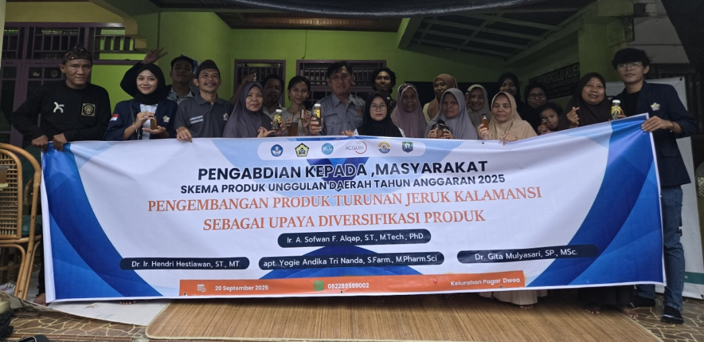
Kalamansi oranges, also known as musk oranges, are a horticultural commodity abundant in Bengkulu Province. Kalamansi orange harvests are often underutilized and are mostly processed into kalamansi syrup, an iconic beverage from the Bengkulu region. One of the challenges faced is the slow sales of kalamansi syrup, as it is often used as a souvenir. Therefore, product diversification beyond kalamansi syrup is necessary. Some potential processed products derived from kalamansi oranges include making packaged drinks with kalamansi orange flavor. Some of the advantages of this beverage include using 100% kalamansi oranges, no preservatives or artificial coloring, a distinctive and fresh taste, and high levels of vitamin C and antioxidants, making it beneficial for health. This community service activity aims to improve the knowledge and skills of residents of Pagar Dewa Village in the process of making packaged drinks with kalamansi orange flavor through training activities. The methods used in this activity are lectures, practice, and questions and answers about the process of making packaged drinks with kalamansi orange flavor. The training was held on September 20, 2025, at a partner's home in Pagar Dewa Village, Bengkulu City, with 20 participants, predominantly teenagers and housewives. The training was successful and ran smoothly according to the previously prepared plan. Participants were highly enthusiastic and actively participated in the training. This community service activity effectively increased the knowledge and skills of Pagar Dewa Village residents in Bengkulu City related to the process of making calamansi orange-flavored packaged beverages by 85%. The training is expected to enable participants to start calamansi orange-flavored packaged beverage businesses due to its ease of production, popularity among Gen Z, and high profit margins.
Downloads
Published
Issue
Section
License
Copyright (c) 2026 Jurnal Pelita Sriwijaya

This work is licensed under a Creative Commons Attribution-ShareAlike 4.0 International License.


